 TRUE NIWAS
What is a Spatial Experience Tour?
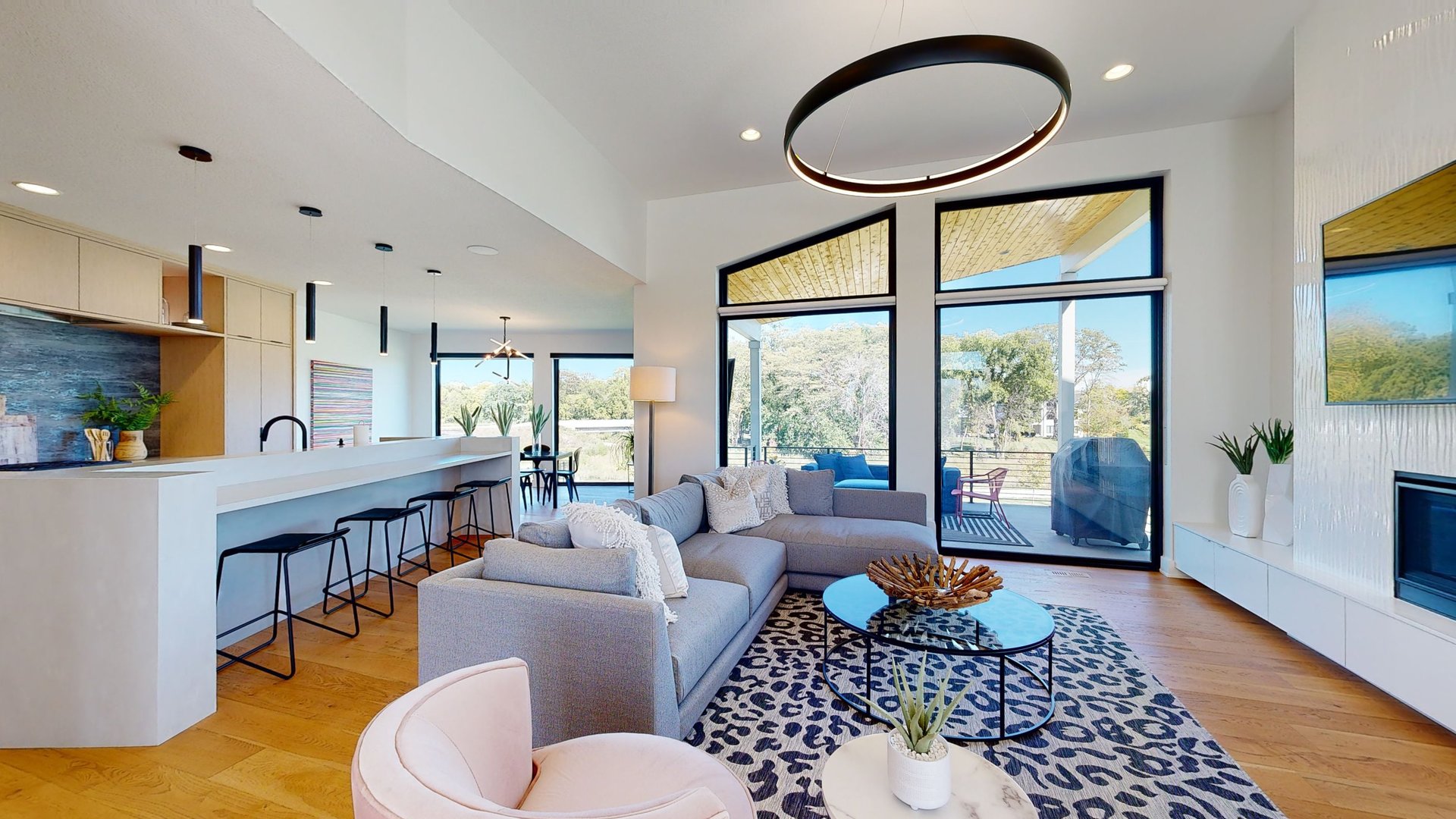
A spatial experience tour lets someone explore an existing property remotely instead of relying on a selection of photographs. For a home, that might mean understanding how the living room connects to the balcony. For a venue, it could mean following the route from the entrance to the main hall. The useful question is not which technology sounds most advanced, but what your visitor needs to understand.
True Niwas offers two approaches within Spatial Experience Tour: a scanned 3D Property Tour and a 360° Virtual Tour built from connected panoramic viewpoints. Both show a place that already exists. They differ in how visitors move through it and in the information the capture can support.
A 3D Property Tour: explore between viewpoints
A scan-based tour represents the property as a navigable three-dimensional scene. It suits visitors who want a stronger sense of movement through rooms, rather than jumping only between fixed camera positions. Capture quality, navigation boundaries and the size of the scene influence how convincing that experience feels.
A visual scan is not automatically a survey. If measurements are important, agree on a measurement-enabled deliverable and the accuracy required before capture. A visually detailed scene alone does not certify dimensions, structural conditions or accessibility.
A 360° Virtual Tour: look around, then move on
A panoramic tour connects viewpoints placed around the property. Visitors turn to see the room and select a hotspot to move to the next position. This can be a straightforward way to show accommodation, dining areas, amenities and event spaces.
The route matters as much as the camera. Start at an understandable entrance, connect adjacent rooms clearly and name the destinations in language a guest would use. Avoid sending visitors back through the same viewpoint just to discover a room they missed.
Choose by the decision, not the technology
Choose a 3D Property Tour when movement and spatial relationships are central to your brief. Consider a 360° Virtual Tour when a clear sequence of panoramic views answers the main questions. Ask to try a representative example on a phone before choosing.
For properties in India, capture logistics depend on location, access and the amount of space included. For projects elsewhere, confirm local capture arrangements and hosting requirements individually. A browser link can be shared remotely, but a finished property still needs suitable on-site capture.
Prepare a useful capture brief
List the rooms, outdoor spaces and visitor routes that must appear. Remove private documents, arrange permissions and decide whether people or personal belongings should be visible. Include your website, the main devices your audience uses and any need for measurements or annotations.
Agree on hosting duration, updates after renovation, link ownership and what happens when the hosting term ends. Test the delivered tour on Wi-Fi and mobile data. These details make the tour easier to use long after the first launch.
Before you brief a studio
Use this checklist to prepare your brief. These checkboxes stay on this page and are not submitted.
Questions, answered.
Does every tour include Measurement Mode?
No. Measurement availability and accuracy depend on the capture method and platform. Include the requirement in your brief.
Is this the same as a walkthrough of an unbuilt property?
No. Existing-property tours capture a real space. Unbuilt properties need visualisation from plans, models and design references.